

A functional tool for active rehabilitation
Relaxes Muscle Spasms
Reduces Muscle Atrophy
Increase Range of Motion
Increases Local Blood Circulation
Neuromuscular ReEducation
Indicated for treatment of:
Chronic pain
Post injury/trauma pain
Muscle reeducation
Post surgical pain
Muscle disuse atrophy
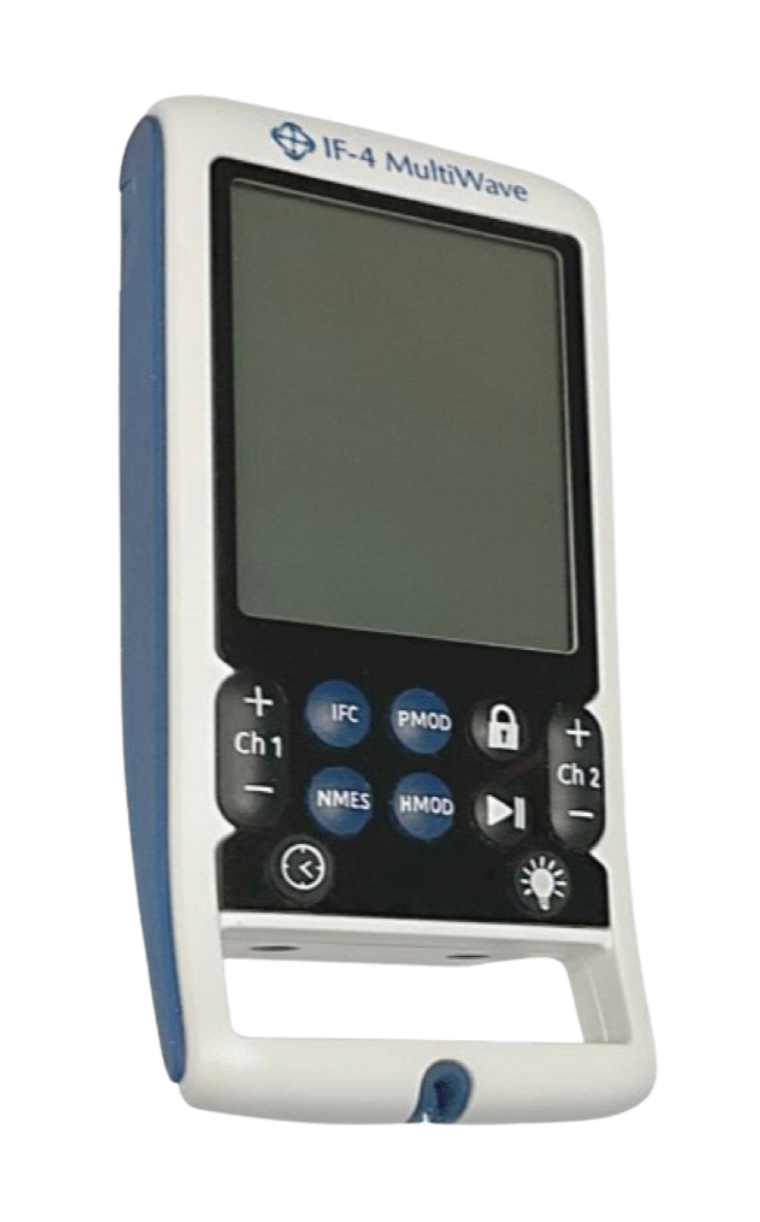
The IF-4 MultiWave is an at-home physical therapy device that uses electrical currents to block pain signals from reaching the brain, increase local blood circulation, break muscle trigger points/spasms, and increase range of motion in the targeted area.
Benefits of Interferential Therapy
Research shows that frequencies between 80 - 150 Hz have therapeutic effects on the body. When this frequency is sent into an injured body part, the electrical stimulation floods the nerves with sensation. This sensation overwhelms the nerves, which blocks pain signals from traveling to the brain. This effect may be produced when using IFC mode on high frequency. The effects are similar to traditional oral painkillers, but stimulation is administered only to the injury and does not have side effects like mood alteration, sleepiness, etc.
Low frequencies between 1 - 10 Hz stimulate the brain’s production of endorphins, the body’s natural pain relievers. This endorphin stimulation may be produced while using IFC mode on low frequency. This program can be used at muscle contraction levels (twitching) to release endorphins and increase blood flow to the target area.

Neuromuscular ReEducation & Strengthening
Aside from relieving pain, our device can also help ‘retrain’ muscles after an injury when using NMES mode. When muscles are injured or atrophied, the neural pathway connection between the brain and that muscle is diminished. The frequency emitted by our device while using this program is similar to the frequency that travels through the neural pathways to the brain as the muscles contract naturally. When NMES mode is applied to the affected muscle, the electricity helps the muscle contract without using the brain. The brain registers this sensation in the stimulated muscle, which strengthens the connection and retrains the neural pathways to pass messages efficiently. This is not possible with a typical TENS unit treatment.
Difference between TENS and Interferential Therapy
Typical at-home stimulation therapy, such as a TENS unit, sends the 80-150 Hz therapeutic frequency into the body via separated pulses of electricity. However, 80-150 Hz is not enough energy to overcome the skin’s resistance to electricity. So, TENS therapy cannot penetrate into the muscle tissue like an interferential device can. The IF-4 MultiWave uses a 4,000 Hz carrier frequency to overcome the skin’s resistance to electricity, delivering the full therapeutic range directly into the muscle tissue of the injured body part.
How Our Device Works
Our device is considered clinical strength. Home electrical stimulation units generally have a 20-30 voltage, resulting in a 40-60 milliamp current. Our device has a voltage of 50, resulting in a 100 milliamp current. The battery is stronger, and longer lasting, to support the more powerful current. In terms of treatment, this means that the IF-4 MultiWave has a stronger therapeutic effect that feels deeper in the muscle tissue.

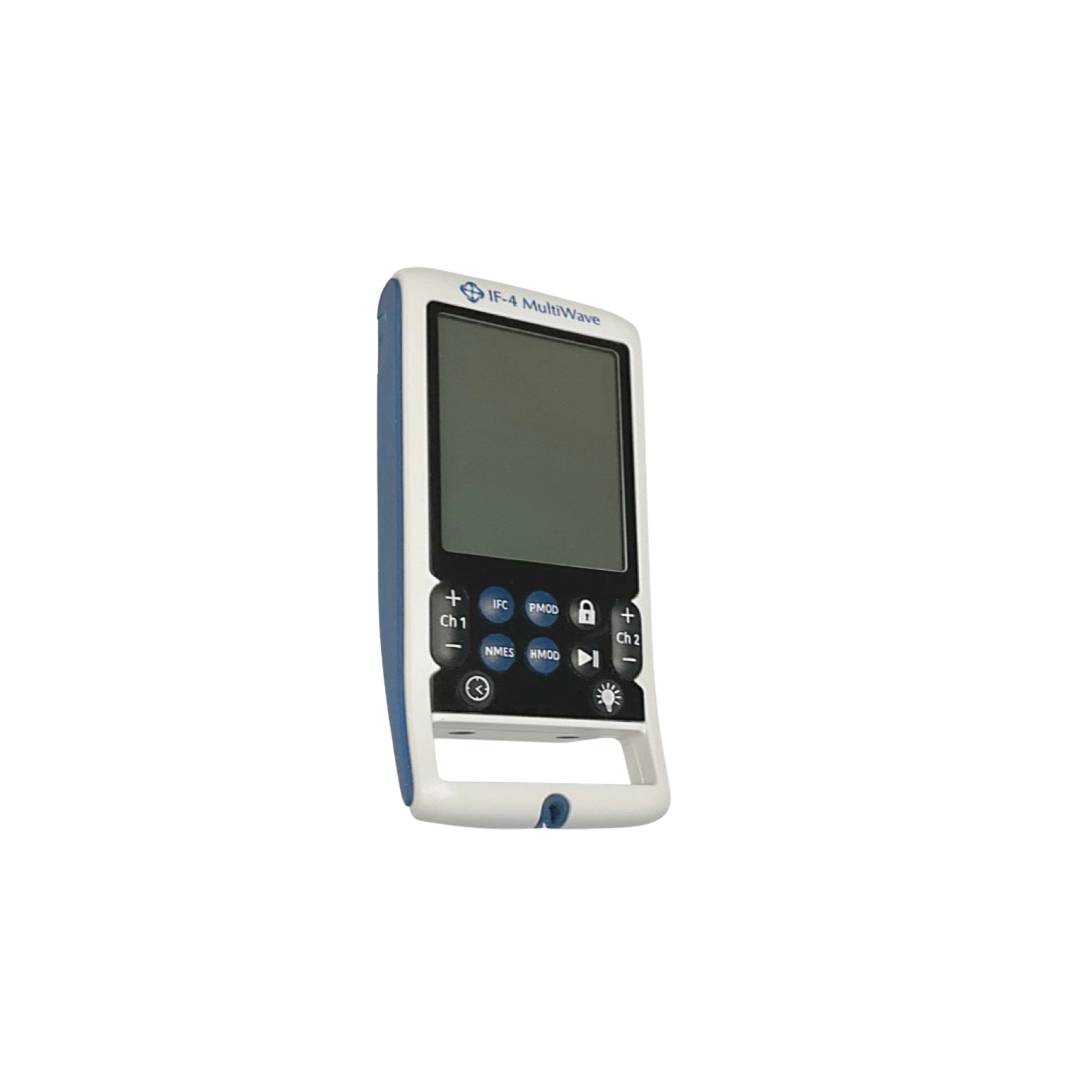
To achieve the therapeutic benefits, electrodes are placed on the skin (1 patch if using the quad style, at least 2 if using the small squares), completing the energy circuit. Within the device, there are 2 electrical generators. One generates a frequency of 4,000 Hz. The other generates a frequency between 4,000-4,150 Hz, depending on the desired strength of treatment. The 2 frequencies are sent into the body through the electrodes, where they collide, or interfere, with each other, producing the therapeutic frequency deep within the muscle tissue. The frequencies will penetrate up to 1 inch below the skin.
The IF-4 MultiWave delivers the frequency via a symmetrical balanced sine wave, meaning that the current is smooth, regular, and constant. This increases the comfort of treatment and reduces the feeling of being pricked or zapped by the electricity, commonly experienced when using other at-home TENS or other interferential devices.